
What began as a humid and overcast October morning unfolded into an evening of haunts, history, and eerie tales thanks to the Salem Ghost Tour: Ghosts, Witches & Wicked Whispers guided walking tour, operated by Salem Ghosts, part of the US Ghost Adventures family.
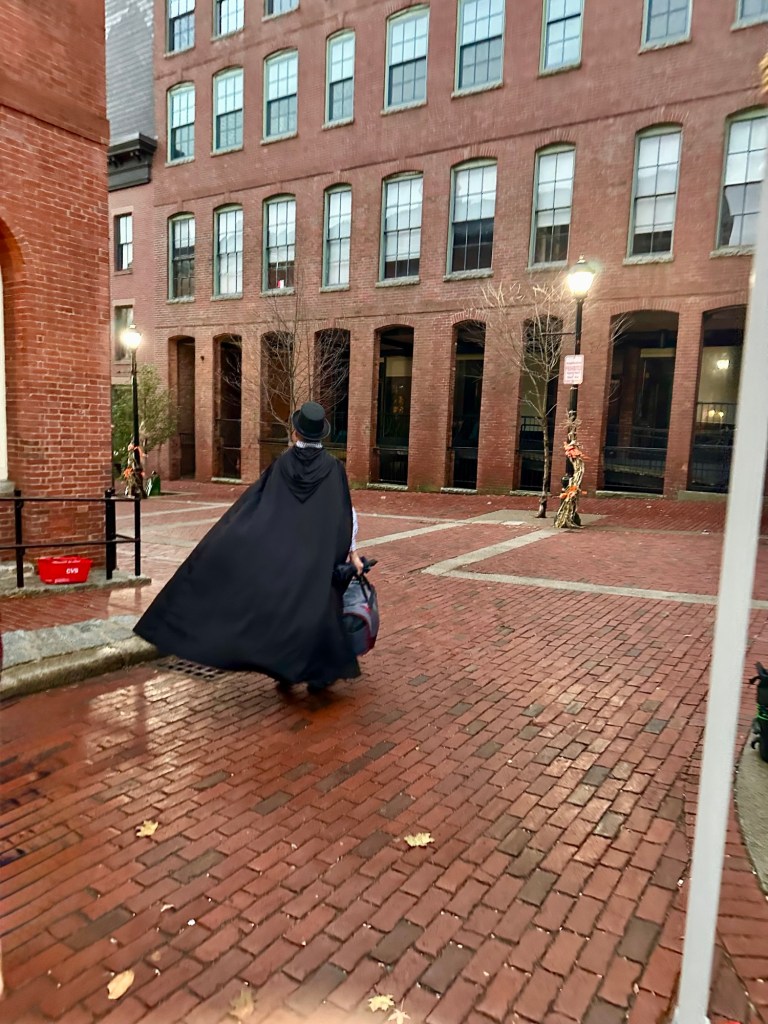
Despite the October-driven crowds, we were pleasantly surprised at how easy it was to navigate downtown. On the day of the tour, our guide Sam texted us with an exact meeting location, time, and description of what they would be wearing so we could recognize them, as it gets busy on Essex Street. Typically, it is recommended to arrive 10 – 15 minutes early so everyone has time to locate the meeting point and guide before the tour officially begins.
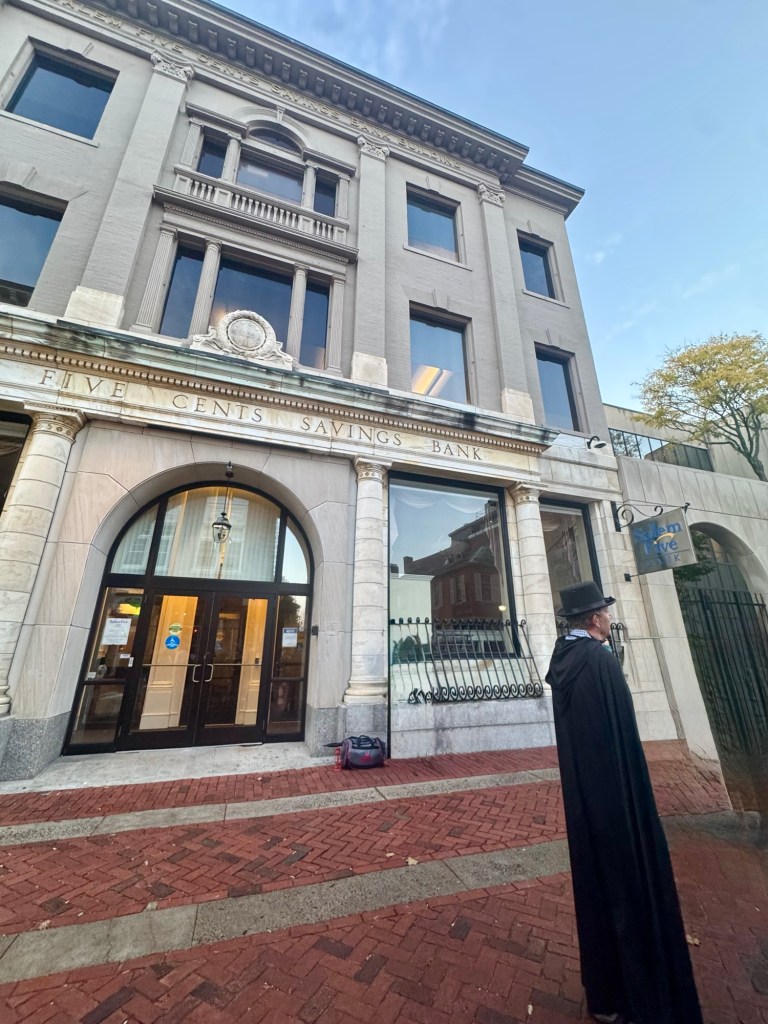
We met Sam and the rest of the group near Salem Five Bank on Essex Street. It happened to be a warm evening with some rain in the forecast. I would highly recommend checking the weather beforehand and choosing appropriate, comfortable shoes and possibly rain gear. Anyone familiar with New England knows that the weather can change quickly, even the ghosts might agree.
Our first stop was 213 Essex Street, right near the corner of Essex and Derby Streets, home to the Magic Parlor Shop since 1995. However, the physical structure itself dates back to the early eighteenth century. According to stories, it was originally built as a mansion for a sea captain who perished on a voyage, leaving behind his widow, who grieved his absence until her death. The sea captain and his widow are among the phantoms believed to make their presence known to those who dare to enter there.
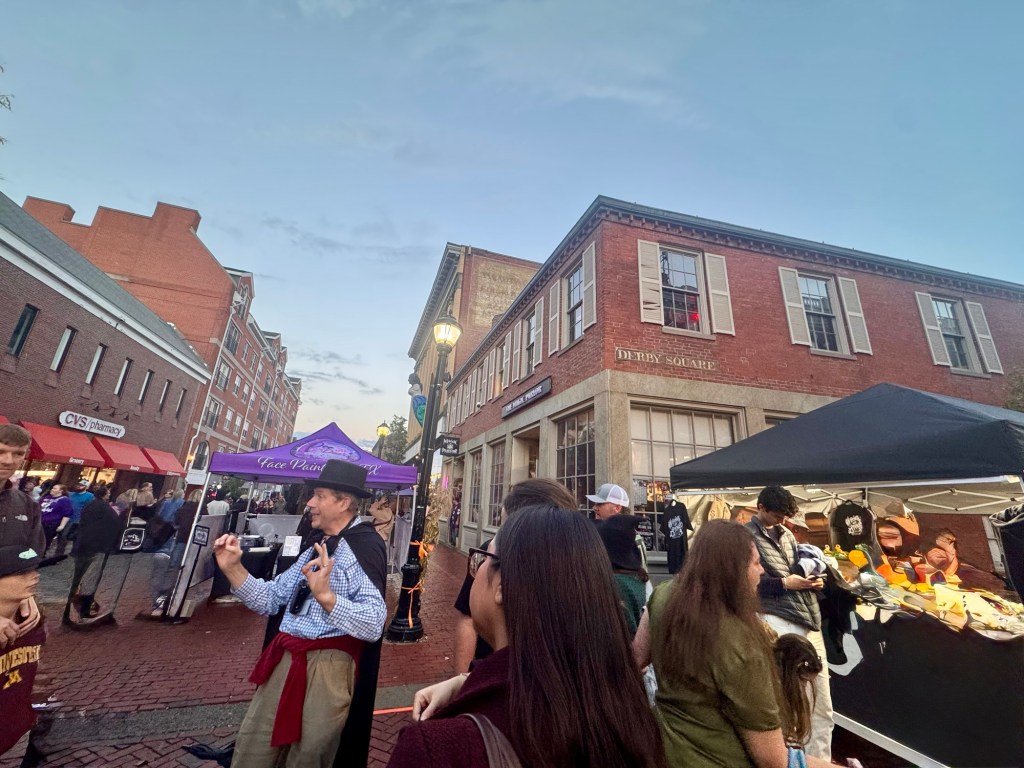
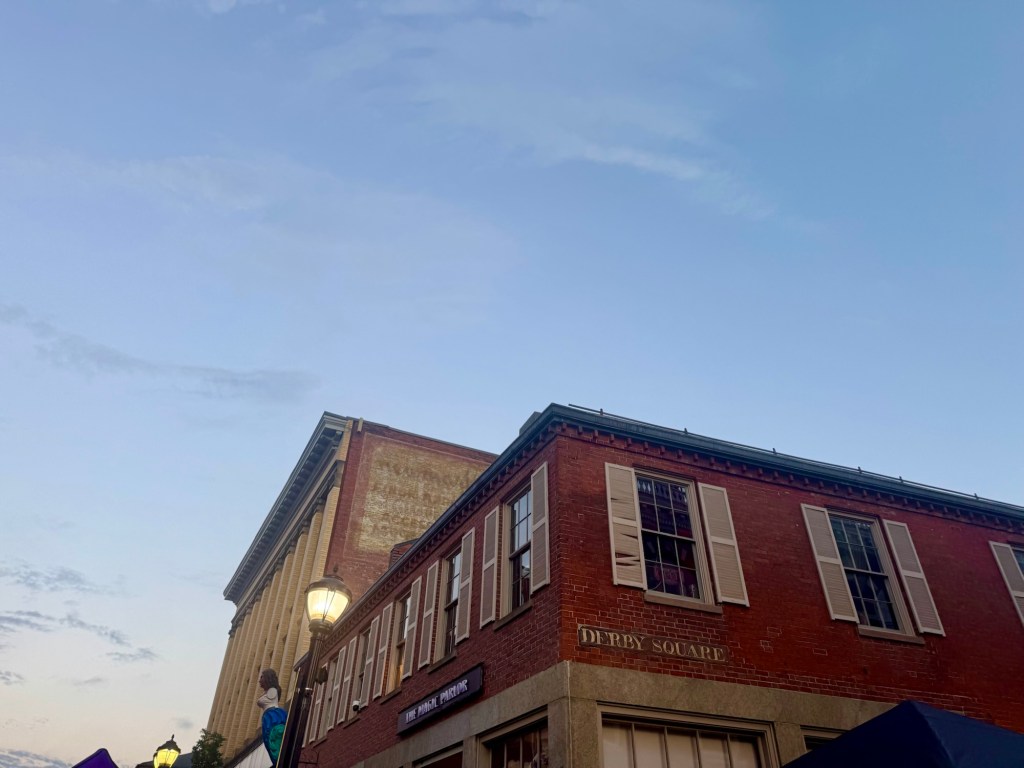
Outside the Magic Parlor’s front door, two faint yellow lines on the cobblestones are linked to stories of underground tunnels once used by local traders and merchants. According to legend, trespassers who met their end in the tunnels became lingering spirits, forever connected to nearby buildings and places of business.
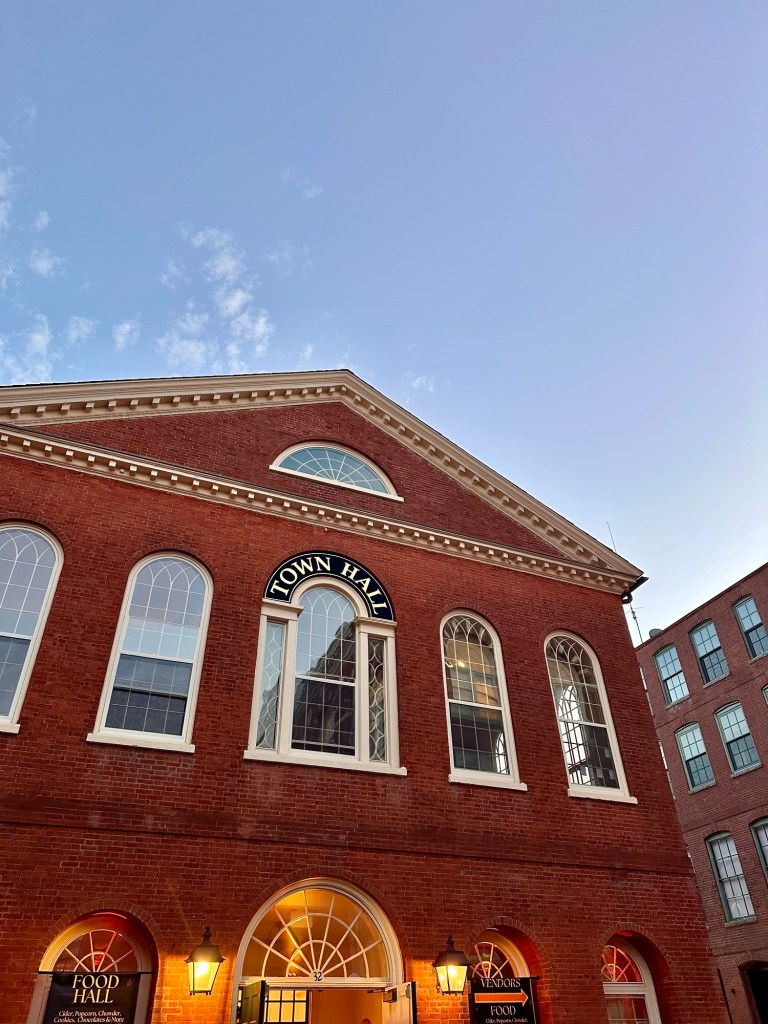
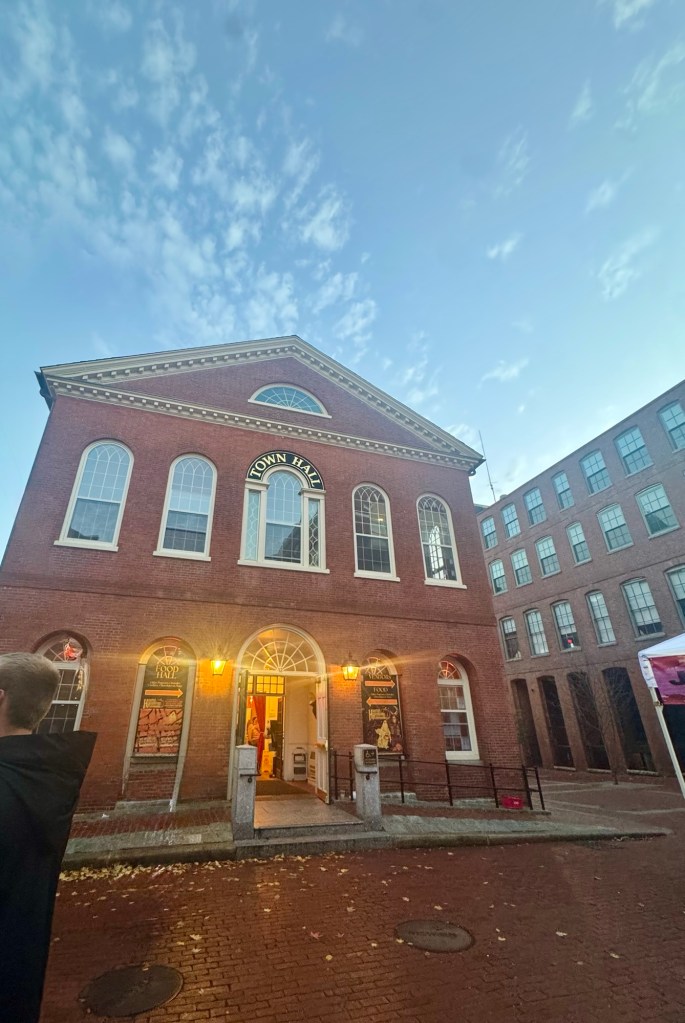
Our route continued to the iconic Old Town Hall, which stands on the former grounds of the Elias Derby mansion. Shortly after the mansion was built, its owner passed away, leaving the property to his son. Because of the extensive maintenance and upkeep costs, Derby’s son decided to demolish the structure, and the property was eventually sold. Old Town Hall was later erected as a community meeting place, with a marketplace on the first floor and municipal offices on the second.
Today, Salem’s municipal offices are located in an entirely different building on Washington Street. Old Town Hall, however, can still be rented for meetings, special events, and weddings, with a supernatural twist. According to local reports, visitors have seen the spirit of a woman moving quickly through the hallways, gazing out the windows, or waving at passersby.
Yet, hearing a ghost story in Salem can feel a little like The Boy Who Cried Wolf. Of course, one would expect to hear ghost stories in Salem. With so many buildings filled with tales of paranormal activity, it seems as though these apparitions might be following us throughout the tour! Around every corner, there is another haunting tale to tell. Did the residents of Salem ever imagine they would become the subjects of eerie stories long after their unusual and sometimes gruesome deaths? These eternal spirits of Salem were once real people who lived, experienced, and enjoyed the city, hopefully, much as we do today.
While some of these haunting tales are more familiar than others, a few remain tucked away in the shadows of Salem’s better-known haunts. One notable stop along the tour was the much-overlooked Merchant Hotel, distinct from the more famous Hawthorne Hotel, on the other side of Essex Street. While the Hawthorne Hotel is well known for its reported hauntings, the Merchant Hotel remains somewhat under the radar.
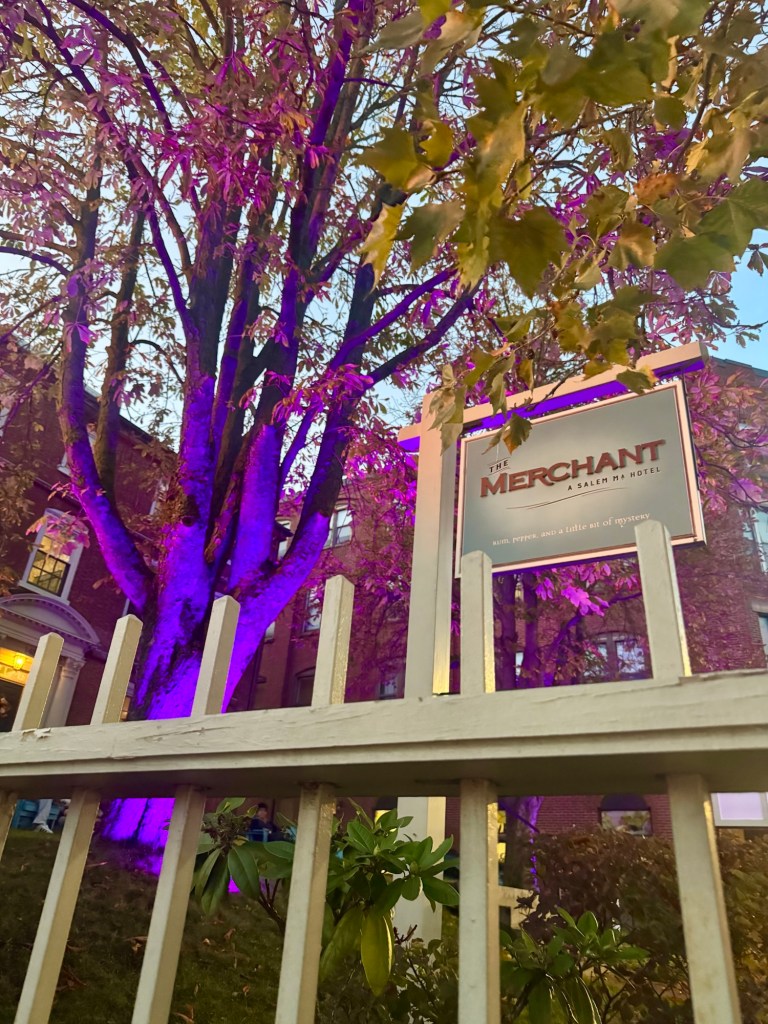
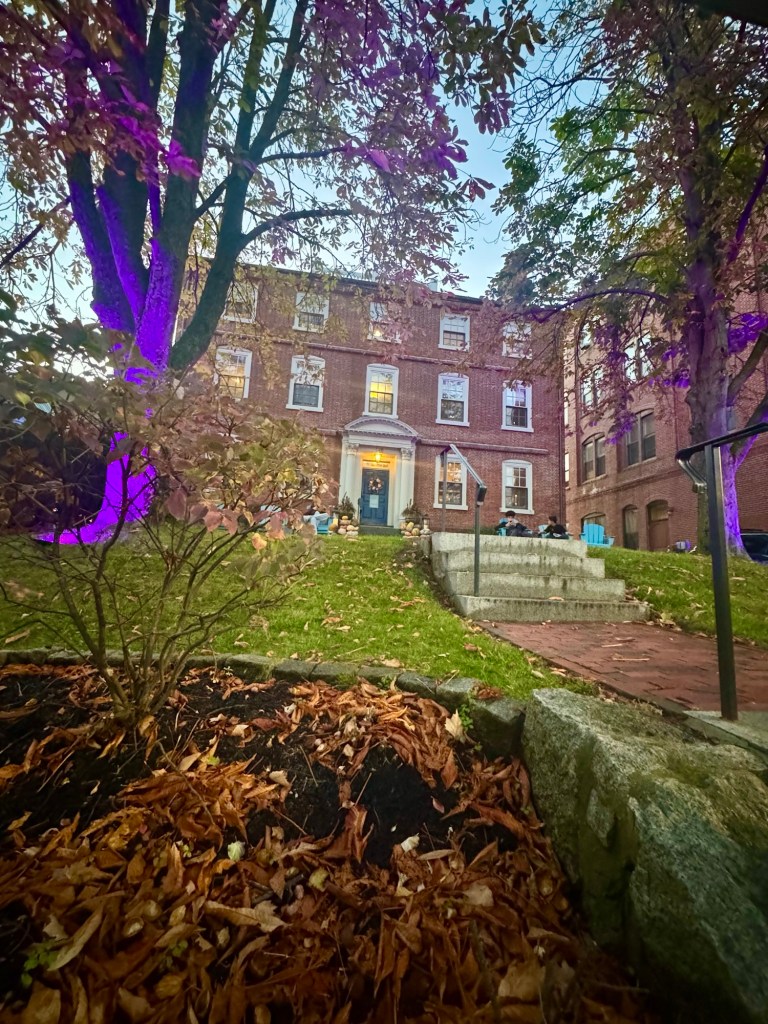
The Merchant Hotel occupies the former Joshua Ward House, an eighteenth-century property built directly on the site of High Sheriff George Corwin’s demolished home and worksite. George Corwin played a brutal role during the 1692 Salem witch trials. According to local stories, George Washington stayed there on October 29, 1789, after the house had been rebuilt and acquired by the successful merchant Joshua Ward. Washington reportedly spent only one night in what is now called the Washington King Deluxe Room and never returned to Salem.
Legend has it that the hotel still vibrates with the suffocating energy of George Corwin, who was locally nicknamed “The Strangler.” Paranormal reports include sensations of choking, gasping for breath, and invisible hands pressing against visitors. To this day, George Corwin remains one of the most infamous and hated figures associated with the Salem witch trials.
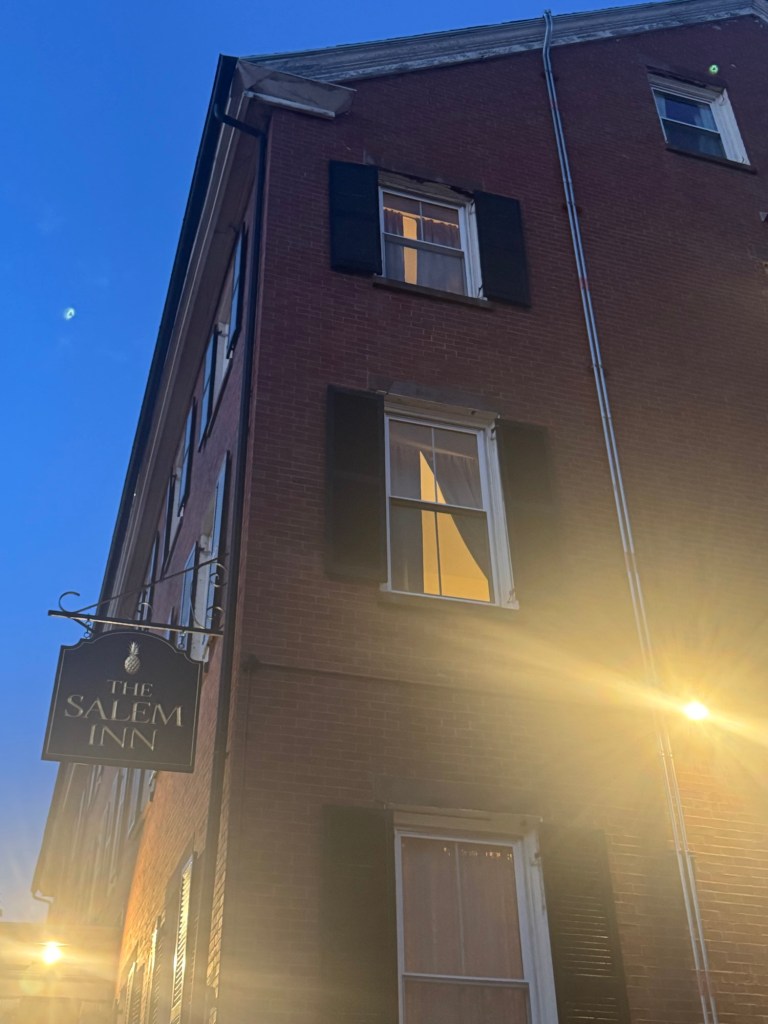
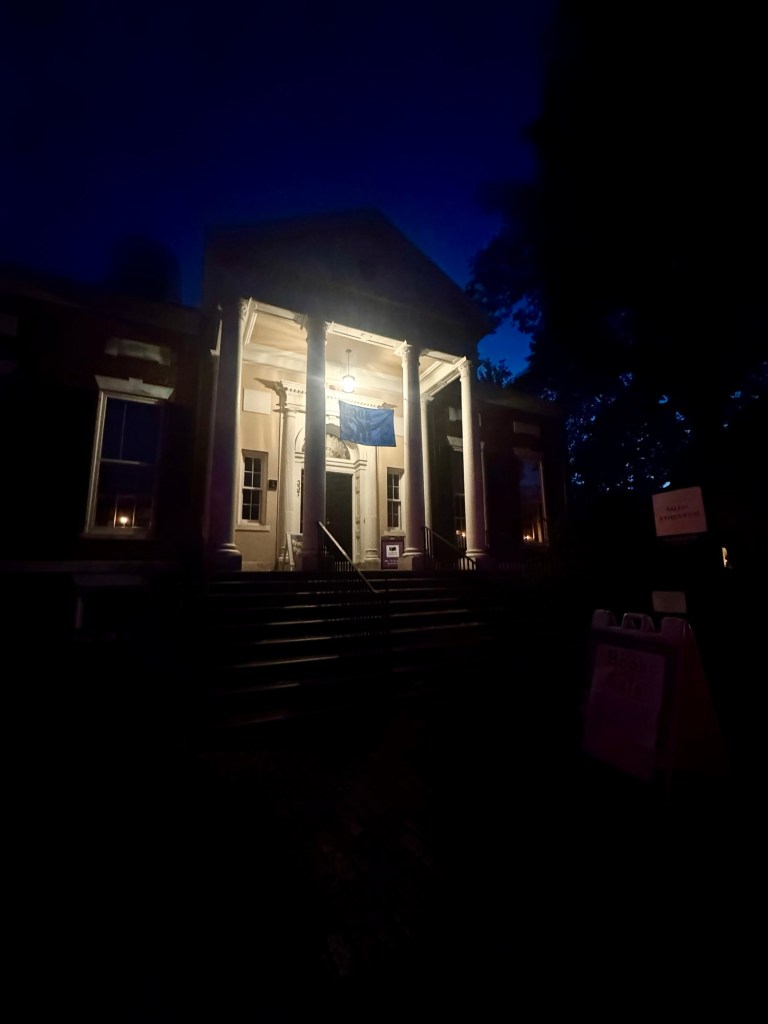
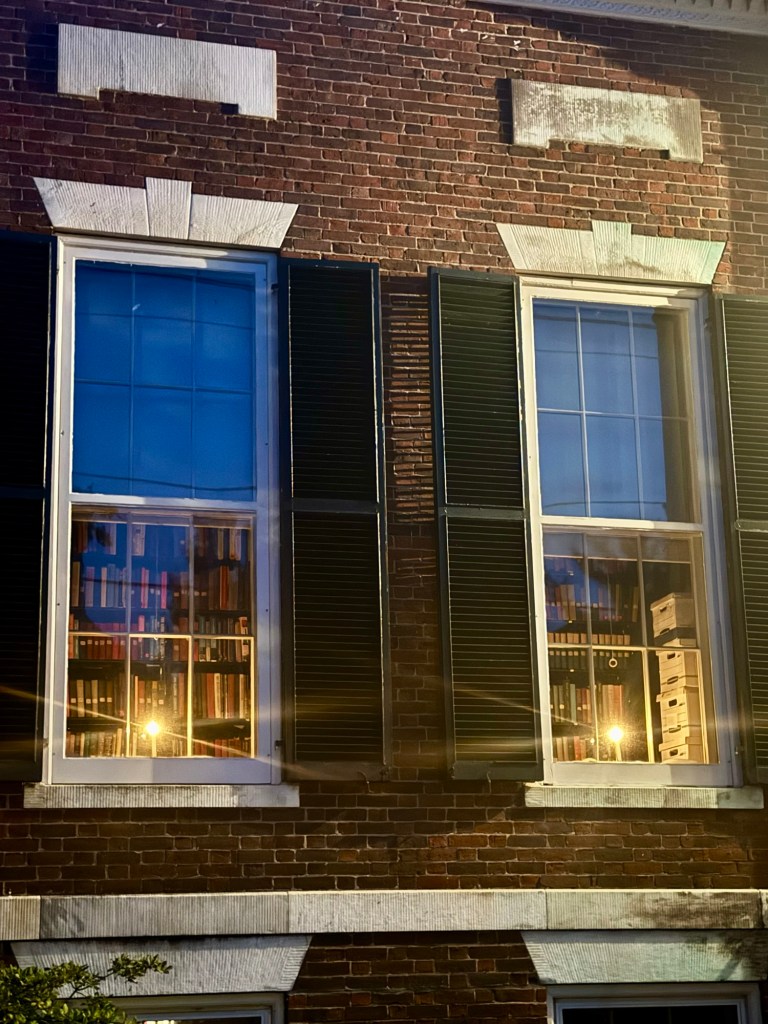
While the Merchant Hotel’s haunting is often associated with the legacy of George Corwin, Salem’s ghost stories can take many forms. After a short walk past the intersection, we stopped at the Salem Inn on Summer Street, which is reportedly haunted by a female spirit and several ghostly cats. It is another option for a spooky overnight stay. The next stop was the Salem Athenaeum, founded in 1810 and recognized as one of the oldest membership libraries in the United States. The Athenaeum also served as a temporary shelter for people displaced by the Great Salem Fire of 1914. Today, it is associated with stories of apparitions connected to the fire, as well as reports of ghostly children, adding another layer to the building’s fascinating history.
The tour continued along Essex Street toward another historic property with a tragic past, the Ropes Mansion, which is associated with Loyalist Judge Nathaniel Ropes. In March 1774, a mob reportedly attacked the mansion while Ropes was ill with smallpox. He died a few days later. Years later, in 1839, his wife, Abigail Ropes, died under tragic circumstances after her petticoat caught fire near warming coals. Visitors have since reported seeing Abigail’s ghost, feeling unexpected heat in her second-floor bedroom, and witnessing objects move on their own.
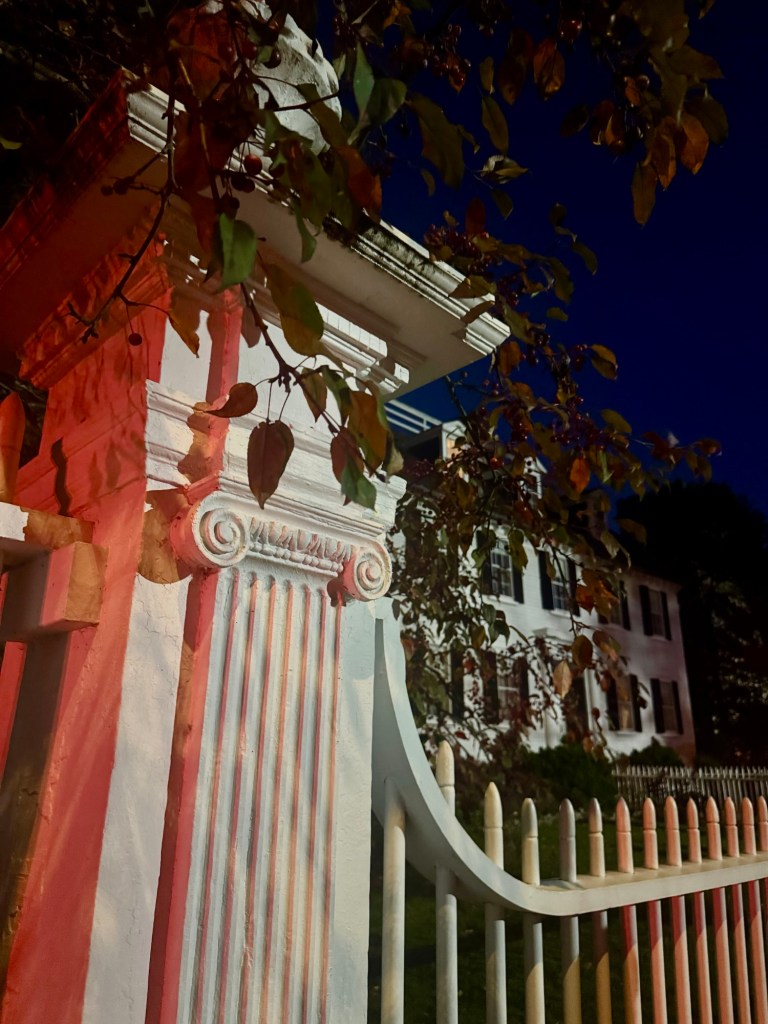
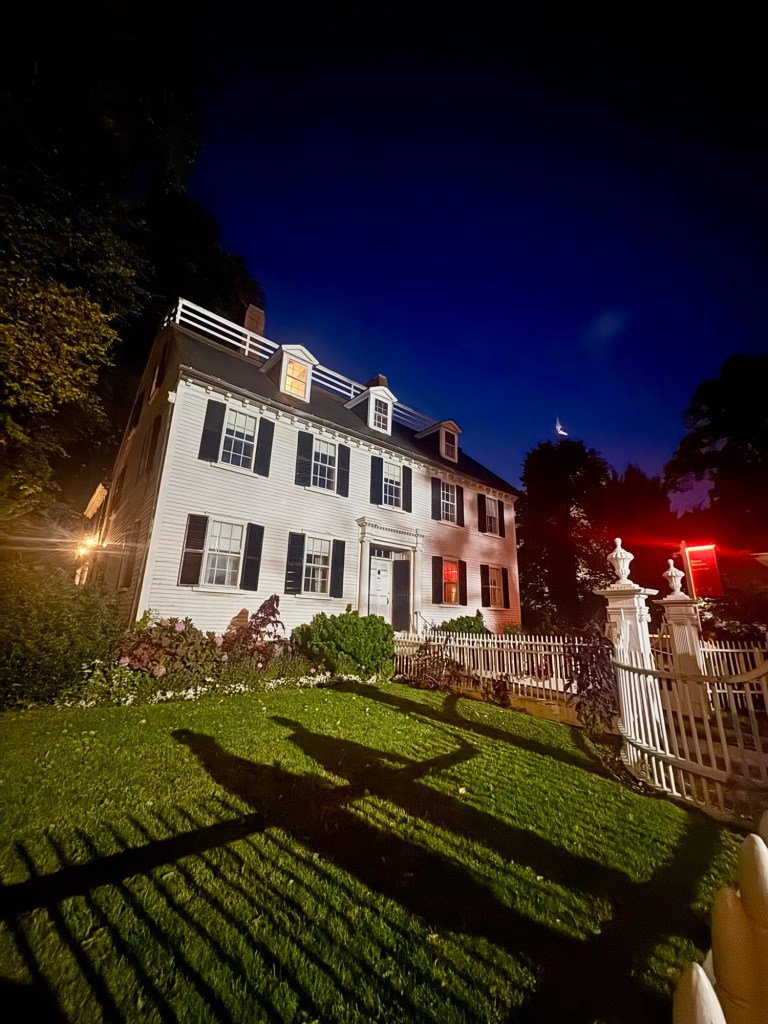
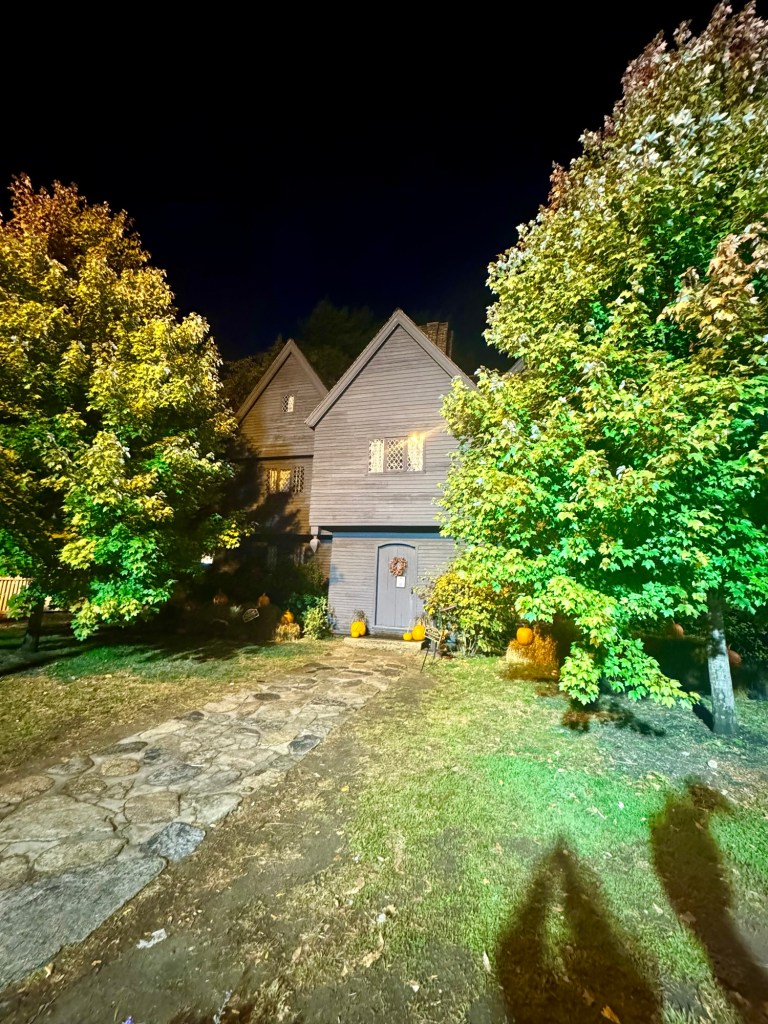
Adjacent to the Ropes Mansion is The Witch House, which was not owned or inhabited by anyone accused of witchcraft. The house belonged to Judge Jonathan Corwin, the uncle of High Sheriff George Corwin. Jonathan Corwin was a wealthy merchant, politician, and local magistrate who participated in the preliminary examinations of people accused of witchcraft. He purchased the house in 1675 and lived there with his family for more than 40 years. Today, it is the only structure still standing in Salem with a direct connection to the judge involved in the Salem witch trials.
The irony is that although Judge Corwin participated in the legal proceedings that led to executions for witchcraft, his own family reportedly used folk magic to protect their home from evil spirits. During restoration work, years later, workers discovered a worn black shoe hidden inside the building’s timber framing. According to stories shared on the tour, either the Corwin family or the builders may have secretly practiced apotropaic (protective) magic. Perhaps the house is connected to witches after all.
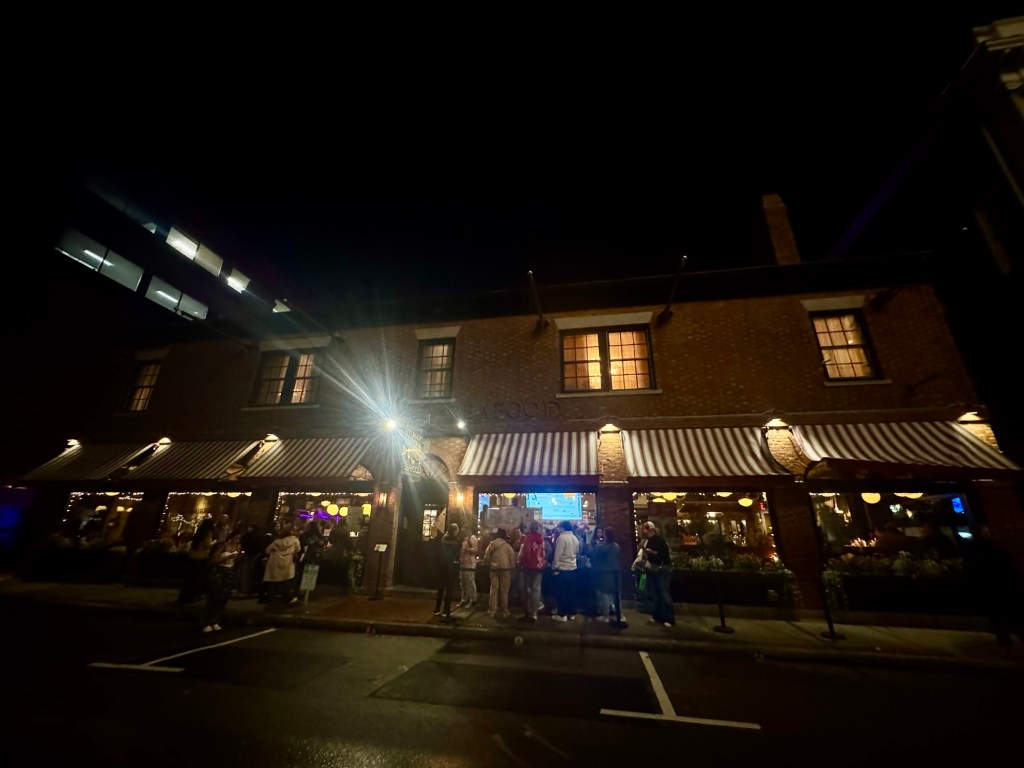
We continued back down Essex Street, where the tour stopped at another place where Salem’s history and legends intertwine: Turner’s Seafood at Lyceum Hall, considered one of Salem’s most haunted restaurants. The restaurant stands on land once owned by Bridget Bishop, the first person executed during the Salem witch trials. Bishop owned a significant amount of property, including an apple orchard believed to have occupied the land where Turner’s now stands. Patrons and staff have reportedly smelled the sweet scent of apples, particularly near the restaurant’s outdoor patio. Many believe the aroma is Bridget Bishop making her presence known, a reminder of the past, and that many may still linger there.
For those looking for a more interactive experience, Salem Ghosts also offers an extended version of the Salem Ghost Tour: Ghosts, Witches & Wicked Whispers where participants can use EMF detectors and explore four additional stops, including the site of Salem’s most famous murder the Gardner-Pingree House on Essex Street.
From historic homes and former trial sites to restaurants brimming with activity, the tour offered plenty of opportunities to learn about Salem’s complicated and gut-wrenching history while hearing the legends that shape its well-known reputation. Although Salem is known for its paranormal tales, the Ghosts, Witches & Wicked Whispers guided walking tour reveals unique details and intriguing connections that could make even skeptics want to dig deeper into the city’s supernatural history.
Salem Ghosts offers several other experiences, including the Boos and Brews Adults-Only Haunted Pub Crawl, Salem’s Pirate Expeditions: Patriots, Plunder & Privateers, and the Secrets of Salem: Hidden Dark History Tour. Visit the Salem Ghosts website to explore the full range of tours.
Whether you enjoy ghosts, history, or atmospheric storytelling, Salem Ghosts offers a memorable way to see the city from a different perspective, even for locals. Just be prepared for crowds, changing weather, and plenty of spooky stories along the way.
One unexpected fact I learned on the tour was that the brand, Old Spice’s iconic ship imagery is linked to real historic vessels, including the Grand Turk and the Friendship, both associated with Salem’s maritime history. The Grand Turk later became the first Massachusetts vessel to reach China, while the Friendship, built in Salem in 1797, completed voyages to destinations including China, Russia, and Europe. How fascinating!

